Since founding InCommon Group just two years ago, we have had the immense pleasure of supporting clients throughout the whole food system. From small community farms to national nonprofits, from strategic planning projects to statewide fund development, our work has been varied but always connected by a common thread: the belief that real, fundamental transformation is doable.
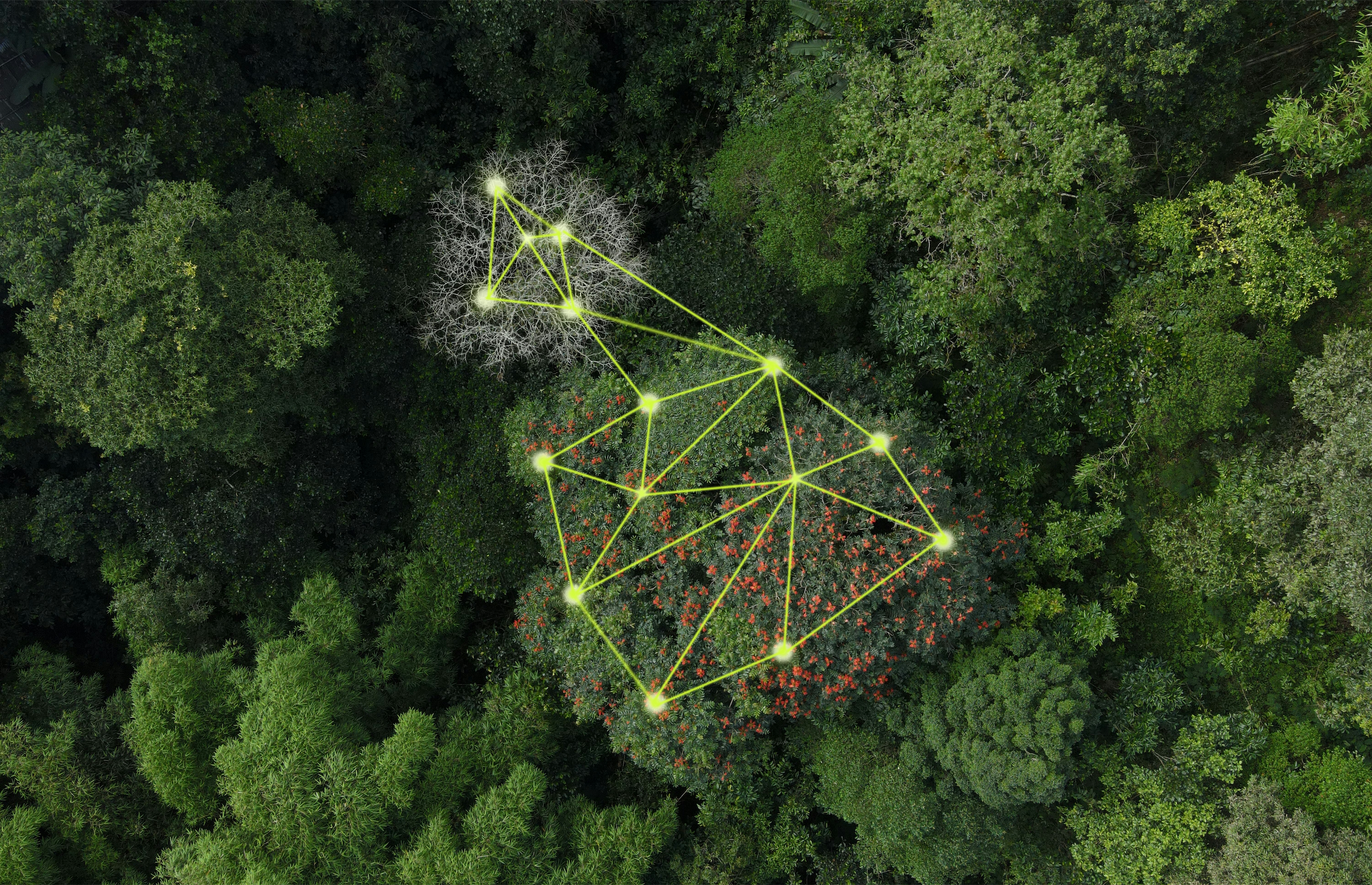
Recently, we were introduced to a framework for regenerative economics by our friend Curtis Ogden, a network theory expert, called Measuring Regenerative Economics: 10 principles and measures undergirding systemic economic health. The framework, from the Research Alliance for Regenerative Economics (RARE), presents a model of economic and social systems as living energy-flow networks. It centers on the fact that long term health depends not simply on maximizing output, but on maintaining robust and equitable exchanges, diversity, learning, and mutualism among and between people, environment, and institutions.
It posits that circulation keeps resources moving, organizational structure distributes power and function, relationships and values hold the system together, and collective learning allows it to evolve. When any one of these breaks down, the system becomes extractive rather than regenerative. Through this regenerative economics framework, we see a pathway forward for the fundamental food system transformation that we and so many others have been ideating, hoping for, and working towards for years.
We have already started applying this framework to our work in agriculture and food systems, and are excited for the new energy and insights it is bringing about. For more on the framework and how we are integrating it into our practice, read on; and in the spirit of collective learning, ask questions and share your thoughts!

1. Circulation – Healthy systems depend on the robust circulation of money, resources, energy, nutrients, and information across all levels. When circulation gets blocked or concentrated, parts of the system become “necrotic”, or left in a state of decay. We have seen this happen within our food system over the last half century–increasing consolidation, inputs that are unsustainable and unreliable, and outputs that are often unhealthy for community vitality, farm viability, natural ecosystems, and public health. Further, many people and communities are still “left behind” and under-resourced: small farms, farm workers, and businesses from historically underserved populations. All of these blocks have led to the breakdown and decay of our food systems–instead, we need to promote optimal circulation to all parts of the system for true health. This looks like supporting local and regional food organizations where dollars and resources circulate among farmers, processors, distributors, retailers, and workers; supporting accessible and equitable technical assistance and financing that circulate knowledge and resources across the food system; and continuing to address the specific needs of areas that are underserved or undersourced so that there is equitable access, opportunities, and outcomes.
2. Organizational Structure – Healthy systems exhibit balanced, fractal structures with many small entities, fewer medium ones, and a limited number of large ones. We currently have a system of massive consolidation and ownership by large businesses, very few middle-sized operators, and many small farms and businesses that struggle to function in an economy that is not designed to meet their needs. These fractal structures should also be integrated across scales to balance efficiency and resilience–we need to move beyond policies and structures that prioritize efficiency over resilience, and support diverse mid- and small-sized entities. We also need structures that help empower people, like shared ownership models of land, farms, and businesses and participatory community processes that strengthen agency, dignity, and belonging.
3. Relationships and Mutuality – Regenerative systems are held together by mutual benefit, trust, reciprocity, fairness, and shared purpose. These values are not moral add-ons; they are functional requirements for long-term system health. For the most part, our agriculture and food system is extractive, even speculative (e.g., financial derivatives and futures markets), and not necessarily constructive. We need far more facilitative and catalytic support systems, like accessible technical assistance by trusted advisors, reduced barriers to capital, and investments in needed infrastructure. We need to foster connections that the current dominant systems have eroded: connections between people and the land, between rural & urban, between producer & consumer, across generations, and across cultures. This means we also need investments in structures that foster mutualism, like community-based organizations and food sovereignty.
4. Collective Learning – The most regenerative systems are learning systems that are able to adapt, innovate, and reorganize in response to change through shared knowledge and feedback. We all need to learn the skills of systems thinking, design thinking, adaptive management, and collective impact. We can all strive to promote policies that support collective learning like farmer-to-farmer learning networks and peer mentoring; foster participatory planning and policy processes that incorporate lived experience from farmers, workers, and communities; develop continuous improvement pathways in grant and financing programs; and build cross-sector learning between agriculture, public health, conservation, and economic development. These are not easy pathways since they do require robust investments in circulation, structures, and relationships, but collective learning must be a priority of a truly regenerative economy.
As we continue to engage with the framework, apply it, and learn from it, we’ll be sharing further insights and lessons via case studies, examining our clients and partners as network elements that are working towards true food systems transformation. Stay tuned!